
Strategies for Choosing the Right Business Structure During Formation
Nov. 24, 2026
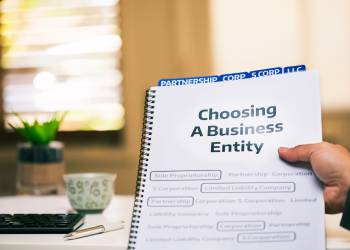 Choosing the right business structure is one of the first important decisions you'll make when starting a business in New Jersey. Whether you're considering a limited liability company (LLC), corporation, or partnership, your choice can affect your personal liability, tax obligations, and how your business is managed. Making an informed decision early can help you avoid costly changes as your business grows.
At Harris Law Offices, I help entrepreneurs and business owners in Cherry Hill and throughout South Jersey compare their options before filing formation documents with the state. I can explain the legal implications of each structure and help you determine which one best suits your business goals.
Contact my office today to schedule a free consultation and discuss your plans for starting a business in New Jersey.
Types of Business Structures to Choose From
Most New Jersey founders choose among four structures: a sole proprietorship, a general partnership, a limited liability company (LLC), or a corporation. The key difference is whether the business exists as a legal entity separate from you, which determines what you file and what you risk.
Sole proprietorship: No state formation filing is required, but if you use a business name other than your own, you must file a trade name certificate with the county clerk in each county where you operate. You are personally responsible for business debts, and profits go on your personal return.
General partnership: Two or more owners follow the same county trade name rule and are also personally responsible for business debts. The partnership files a return, and each partner pays tax on his or her share.
LLC: You form it by filing a certificate of formation with the New Jersey Division of Revenue and Enterprise Services (DORES). It generally shields owners' personal assets and is taxed like a sole proprietorship or partnership unless it elects corporate treatment.
Corporation: You form it by filing a certificate of incorporation with DORES. It generally shields shareholders' personal assets and pays the New Jersey Corporation Business Tax unless it is an S corporation.
An S corporation is a federal tax status, not a separate entity. New Jersey once required its own S election, and older guides still say so, but for tax periods beginning on or after December 22, 2022, the state automatically recognizes federal S status once the business provides proof of that status and a shareholder consent, as the Division of Taxation's S corporation guidance explains.
Determining Which Is Right for You
The right business structure depends on your financial risks, tax situation, and ownership plans. Before making a decision, consider these important factors:
Personal liability: An LLC or corporation generally separates business debts and liabilities from your personal assets. However, this protection has limits, particularly if you personally guarantee debts or are responsible for your own negligence.
Tax obligations: Pass-through taxation may work well for many small businesses, while an S corporation tax election may offer advantages in certain circumstances. An attorney and accountant can help you evaluate the legal and financial implications.
Ownership arrangements: If you're starting a business with others, an operating agreement, shareholders' agreement, or partnership agreement should address financial contributions, decision-making authority, and what happens when an owner leaves, becomes disabled, or dies.
Professional licensing: Certain licensed professionals may face restrictions on the business structures they can use. Check New Jersey's applicable professional licensing requirements before forming an entity.
Future business changes: Your structure should accommodate potential growth, new investors, or changes in ownership. New Jersey permits certain entity conversions, but restructuring may involve additional filings and tax consequences.
Careful planning around new business formation in New Jersey can help you choose a structure that supports your current operations while allowing for future changes.
How to Prepare for Business Formation
Preparing well means gathering what the state will ask for and making the decisions the filing won't make for you. Before you form your business, work through these steps:
Confirm your name is available. Entity names must be distinguishable on the state's records, while trade names go through the county clerk.
Choose a registered agent with a New Jersey street address to receive legal papers for your LLC or corporation.
Decide on management. An LLC can be run by its members or by managers, and a corporation needs at least one initial director and one incorporator.
Obtain a federal Employer Identification Number (EIN), which most entities and any business with employees will need.
Register for state taxes. Every New Jersey business files Form NJ-REG at no charge. According to the Division of Revenue and Enterprise Services' registration instructions, an LLC or corporation must file it within 60 days of formation, and a business collecting sales tax must register at least 15 days before its first sale.
Put your internal rules in writing. You don't file an operating agreement or bylaws with the state, but without one, default statutory rules may decide important questions for you.
Calendar your annual report, which is due each year in the entity's anniversary month. Repeatedly missing it can lead the state to revoke the entity's standing.
Also ask your municipal and county clerks about local licenses or permits, so your business is fully registered before the first invoice goes out.
Trusted Business Law Guidance in New Jersey
Choosing a business structure is less about picking the most popular option and more about matching the entity to your risk, your taxes, and your co-owners, then backing that choice with the right filings and a written agreement. Getting those pieces aligned before you file is far easier than untangling them after the business is running. With a Master of Laws in Taxation and more than four decades in practice, I help owners weigh the legal and tax sides of that decision together.
From my office in Haddon Heights, I work with business owners in Cherry Hill, Haddonfield, Collingswood, and Haddon Township, as well as throughout Camden and Burlington Counties. If you are still deciding between an LLC, a corporation, or a partnership, schedule a free consultation with me, your business formation attorney in Cherry Hill, before you file anything with the state.